[et_pb_section fb_built=”1″ _builder_version=”4.14.1″ _module_preset=”default” custom_padding=”0px||0px|||” global_colors_info=”{}”][et_pb_row _builder_version=”4.14.1″ _module_preset=”default” max_width=”720px” global_colors_info=”{}”][et_pb_column type=”4_4″ _builder_version=”4.14.1″ _module_preset=”default” global_colors_info=”{}”][et_pb_text _builder_version=”4.14.2″ _module_preset=”default” hover_enabled=”0″ global_colors_info=”{}” sticky_enabled=”0″]
Week 4
[/et_pb_text][et_pb_text _builder_version=”4.14.2″ _module_preset=”default” text_text_color=”#000000″ text_font_size=”16px” hover_enabled=”0″ global_colors_info=”{}” sticky_enabled=”0″]
Reason 1
Exercise Improves Muscle Health, Decreases Weight and Combats Obesity
[/et_pb_text][/et_pb_column][/et_pb_row][/et_pb_section][et_pb_section fb_built=”1″ _builder_version=”4.14.2″ _module_preset=”default” custom_margin=”-6px|||||” custom_padding=”0px||3px|||” hover_enabled=”0″ global_colors_info=”{}” sticky_enabled=”0″][et_pb_row column_structure=”1_2,1_2″ _builder_version=”4.14.1″ _module_preset=”default” width=”73%” max_width=”720px” custom_padding=”||4px|||” hover_enabled=”0″ global_colors_info=”{}” sticky_enabled=”0″][et_pb_column type=”1_2″ _builder_version=”4.14.1″ _module_preset=”default” hover_enabled=”0″ global_colors_info=”{}” sticky_enabled=”0″][et_pb_text _builder_version=”4.14.2″ _module_preset=”default” text_text_color=”#000000″ text_font_size=”18px” hover_enabled=”0″ global_colors_info=”{}” sticky_enabled=”0″]
Sarcopenia
Sarcopenia is the loss of muscle mass and strength as we age [1]. This process involves a decline in muscle fibres which begins from the age of 50. It will occur in everyone when they reach a certain age. This will also happen in athletes.
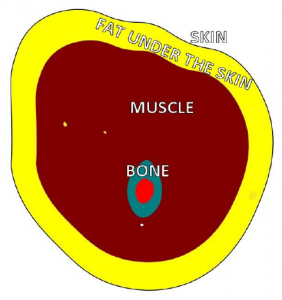
Cross-section of a normal thigh showing an appropriate mix of muscle and fat
However, lack of exercise increases the chances of developing sarcopaenia much more and also decreases the age at which it first presents. Hence, individuals who lead a sedentary lifestyle will lose more strength earlier than those who exercise often [1]. In the UK, sarcopenia affects 4.6% of older men and 7.9% of older women [1].
The resulting loss of muscle mass increases physical disability and causes poor quality of life and early death [1]. In addition, the associated muscle weakness reduces stability and increases the risk of falling and causing injuries. As a result of these negative effects, sarcopenia has become a focal point of research and public debate. Despite this attention, it remains poorly managed in real life [1].
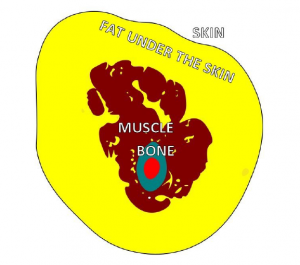
Cross-section of the thigh with sarcopenia showing higher fat to muscle ratio
There are, unfortunately, no medications or injections available to treat the condition. Hence, the management of sarcopenia relies heavily on muscle strengthening exercises [1]. Resistance and strengthening exercises, even performed for short periods of time, can halt the progression of sarcopenia [1].
[/et_pb_text][et_pb_text _builder_version=”4.14.2″ _module_preset=”default” text_text_color=”#000000″ text_font_size=”18px” hover_enabled=”0″ global_colors_info=”{}” sticky_enabled=”0″]
The muscle-to-fat ratio
Although obesity is bad for health for numerous reasons, what really matters regarding musculoskeletal pain, is the fat-to-muscle ratio. Consider this metaphor: when constructing a building, a builder needs both cement and sand. It is crucial that the builder has the right mix of cement and sand for the structure to be strong.
If there is too much sand and too little cement, the structure will be weak and more likely to fall apart. In the human body, muscle is like the cement and fat is like the sand. It does not matter if a person is large or small; what matters is the right mix of muscle and fat. Too much fat and not enough muscle will weaken the structure of the body, causing pain. Hence, a thin lady with no muscle is more at risk of musculoskeletal pain than a large person with more muscle. Even if a person is overweight, as long as they have a good muscle-to-fat ratio, they could avoid musculoskeletal pain. This highlights the importance of keeping the muscles strong and avoiding sarcopaenia, whilst managing body fat percentage and evading obesity.
[/et_pb_text][/et_pb_column][et_pb_column type=”1_2″ _builder_version=”4.14.1″ _module_preset=”default” global_colors_info=”{}”][et_pb_text _builder_version=”4.14.2″ _module_preset=”default” text_text_color=”#000000″ text_font_size=”18px” hover_enabled=”0″ global_colors_info=”{}” sticky_enabled=”0″]
Obesity
Obesity is a dangerous and prominent problem in today’s society. Its prevalence has increased dramatically over the past decades, to the point where it is now considered a global epidemic [2]. Obesity is associated with an increased risk of numerous chronic diseases, including cardiovascular disease, cancer, and osteoarthritis [2]. Consequently, it is also related to an increased risk of disability [2]. Tackling obesity is, therefore, an important task but, unfortunately, is not easily achieved.
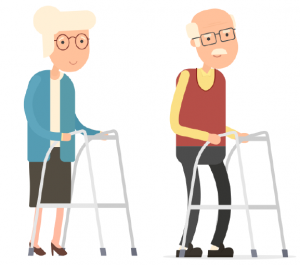
Lack of exercise causes sarcopenia
Exercise alone cannot combat obesity but helps in weight reduction. Exercise needs to be combined with a healthy diet and behavioural changes to reduce weight effectively.
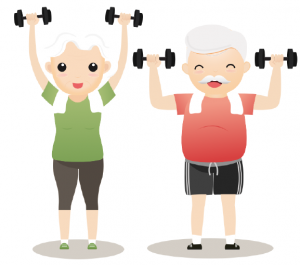
Exercise prevents and cures sarcopenia
A 2019 study by Budui and team assessed the short-term effectiveness of an intensive multi-dimensional rehabilitation program (MRP) on elderly patients with severe obesity [2]. The rehabilitation programme included diet, exercise and behavioural therapy and was conducted for a period of three weeks [2]. The results of the study showed that even after just three weeks of a multi-dimensional rehabilitation programme, the three following changes occurred. On average, body weight reduced by 3.4%, Body Mass Index (BMI) by 3.9% and waist circumference by 3.4% [2]. The study concluded that the three-week multi-dimensional rehabilitation programme provided significant obesity-related improvements. This can, in turn, lead to a reduced risk of obesity-associated conditions, decreased frailty and improved quality of life [2].
[/et_pb_text][et_pb_image src=”https://exercise.freefrompain.org.uk/wp-content/uploads/2021/12/sand.png” _builder_version=”4.14.2″ _module_preset=”default” title_text=”sand” border_width_all=”1px” hover_enabled=”0″ sticky_enabled=”0″][/et_pb_image][et_pb_image src=”https://exercise.freefrompain.org.uk/wp-content/uploads/2021/12/cement.png” _builder_version=”4.14.2″ _module_preset=”default” title_text=”cement” border_width_all=”1px” hover_enabled=”0″ sticky_enabled=”0″][/et_pb_image][et_pb_text _builder_version=”4.14.2″ _module_preset=”default” text_text_color=”#000000″ text_font_size=”18px” hover_enabled=”0″ global_colors_info=”{}” sticky_enabled=”0″]
Every building needs the right mix of sand and cement. Too little cement will make the building weak. Similarly, too little muscle will make the body weak.
[/et_pb_text][/et_pb_column][/et_pb_row][et_pb_row _builder_version=”4.14.2″ _module_preset=”default”][et_pb_column _builder_version=”4.14.2″ _module_preset=”default” type=”4_4″][et_pb_text _builder_version=”4.14.2″ _module_preset=”default” hover_enabled=”0″ sticky_enabled=”0″ text_font_size=”18px” text_text_color=”#000000″]
Want to test yourself for sarcopaenia? Complete the SARC-F questionnaire.
The SARC-F questionnaire is a brief screening test for sarcopaenia. It is a simple five-item questionnaire that detects if a person is at risk of the condition [3]. The questionnaire has exhibited good reliability and validity [3]. We have included the questionnaire below to enable you to screen yourself for the condition. Answer these five questions and add up your score. A total score of 4 or more indicates sarcopaenia.
[/et_pb_text][/et_pb_column][/et_pb_row][/et_pb_section][et_pb_section fb_built=”1″ _builder_version=”4.14.1″ _module_preset=”default” custom_padding=”0px||13px|||” global_colors_info=”{}”][et_pb_row _builder_version=”4.14.2″ _module_preset=”default” column_structure=”1_2,1_2″ custom_padding=”20px|||20px|false|false” hover_enabled=”0″ sticky_enabled=”0″ border_width_all=”1px”][et_pb_column _builder_version=”4.14.2″ _module_preset=”default” type=”1_2″][et_pb_text _builder_version=”4.14.2″ _module_preset=”default” hover_enabled=”0″ sticky_enabled=”0″ text_font_size=”18px” custom_padding=”||0px|||”]
1. Strength – How much difficulty do you have in lifting and carrying 10 pounds?
None = 0
Some = 1
A lot or unable = 2
- Assistance in walking – How much difficulty do you have walking across a room?
None = 0
Some = 1
A lot, use aids, or unable = 2
- Rise from a chair – How much difficulty do you have transferring from a chair or bed?
None = 0
Some = 1
A lot or unable without help = 2
[/et_pb_text][/et_pb_column][et_pb_column _builder_version=”4.14.2″ _module_preset=”default” type=”1_2″][et_pb_text _builder_version=”4.14.2″ _module_preset=”default” hover_enabled=”0″ sticky_enabled=”0″ text_font_size=”18px”]
4. Climb stairs – How much difficulty do you have climbing a flight of ten stairs?
None = 0
Some = 1
A lot or unable = 2
- Falls – How many times have you fallen in the last year?
None = 0
1–3 falls = 1
4 or more falls = 2
[/et_pb_text][/et_pb_column][/et_pb_row][/et_pb_section][et_pb_section fb_built=”1″ _builder_version=”4.14.1″ _module_preset=”default” background_color=”rgba(12,113,195,0.09)” custom_padding=”0px|||||” global_colors_info=”{}”][et_pb_row _builder_version=”4.14.1″ _module_preset=”default” global_colors_info=”{}”][et_pb_column type=”4_4″ _builder_version=”4.14.1″ _module_preset=”default” global_colors_info=”{}”][et_pb_text _builder_version=”4.14.2″ _module_preset=”default” hover_enabled=”0″ global_colors_info=”{}” sticky_enabled=”0″]
Metaphor 4 – Why Does My Back Hurt With Any Movement?
[/et_pb_text][/et_pb_column][/et_pb_row][et_pb_row column_structure=”1_2,1_2″ _builder_version=”4.14.1″ _module_preset=”default” global_colors_info=”{}”][et_pb_column type=”1_2″ _builder_version=”4.14.1″ _module_preset=”default” global_colors_info=”{}”][et_pb_text _builder_version=”4.14.2″ _module_preset=”default” hover_enabled=”0″ sticky_enabled=”0″ text_font_size=”18px” text_text_color=”#000000″]
What is the story?
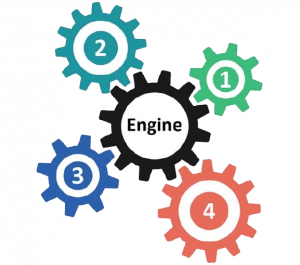
There was a problem with the gearbox in Philip’s car. When he started the car, he tried to put it into first gear to move off. Due to the damage in the gearbox, Philip was unable to engage first gear and it automatically slipped into fourth gear. The car then stalled, and Philip was unable to move forward.
So, what went wrong?
To move off from a stationary position, we initially need to engage the first gear, then the second and so on to the fourth gear. If the gearbox is damaged and the first gear will not engage, we are unlikely to move forward.
How can we relate this story to our health?
Many different layers of muscles surround the spine. Each layer has a specific purpose. The muscle layer closest to the spine “stabilises” the spine and the layers further away “move” the spine. In the ideal situation, the “stabilisers” need to act before the “movers”. The “stabiliser” muscles are small and after an injury or a bout of back pain, the “stabiliser” muscles become weak, whilst the “mover” muscles are large and do not. In this situation, the larger “movers” work more to compensate for the weakness in the “stabilisers”. When the larger “movers” act without the smaller “stabilisers”, it creates abnormal forces across the discs in the spine. This, unfortunately, causes sudden spasms of back pain.
[/et_pb_text][/et_pb_column][et_pb_column type=”1_2″ _builder_version=”4.14.1″ _module_preset=”default” global_colors_info=”{}”][et_pb_text _builder_version=”4.14.2″ _module_preset=”default” hover_enabled=”0″ sticky_enabled=”0″ text_font_size=”18px” text_text_color=”#000000″]
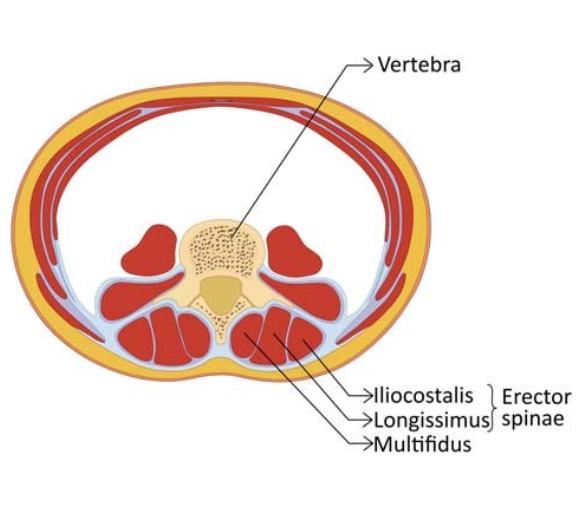
Cross-section of the trunk. The tummy is at the top and the spinal column with the muscles are at the bottom of the figure. The multifidus, the longissimus and the Iliocostalis are the muscles that surround the spinal column.
This is like the gearbox falling into fourth gear when attempting to engage the first gear. In the car, the faulty gearbox can be changed, but the muscles in the back cannot be replaced. The good news, however, is that the “stabilisers” can be retrained to start their action before the “movers”. Repeatedly pulling in our belly button towards our spine and pulling up the pelvic sling retrains the smaller “stabilisers”.
Moral of the story
Look after the small muscles and the bigger ones will look after themselves.
[/et_pb_text][/et_pb_column][/et_pb_row][/et_pb_section][et_pb_section fb_built=”1″ _builder_version=”4.14.1″ _module_preset=”default” background_color=”rgba(120,216,30,0.13)” global_colors_info=”{}”][et_pb_row _builder_version=”4.14.1″ _module_preset=”default” global_colors_info=”{}”][et_pb_column type=”4_4″ _builder_version=”4.14.1″ _module_preset=”default” global_colors_info=”{}”][et_pb_text _builder_version=”4.14.1″ _module_preset=”default” text_text_color=”#000000″ text_font_size=”16px” global_colors_info=”{}”]
Exercise Notes For Week 1
[/et_pb_text][/et_pb_column][/et_pb_row][et_pb_row column_structure=”2_3,1_3″ _builder_version=”4.14.1″ _module_preset=”default” global_colors_info=”{}”][et_pb_column type=”2_3″ _builder_version=”4.14.1″ _module_preset=”default” global_colors_info=”{}”][et_pb_text _builder_version=”4.14.1″ _module_preset=”default” text_text_color=”#000000″ text_font_size=”16px” global_colors_info=”{}”]
“Lorem ipsum dolor sit amet, consectetur adipiscing elit, sed do eiusmod tempor incididunt ut labore et dolore magna aliqua. Ut enim ad minim veniam, quis nostrud exercitation ullamco laboris nisi ut aliquip ex ea commodo consequat. Duis aute irure dolor in reprehenderit in voluptate velit esse cillum dolore eu fugiat nulla pariatur. Excepteur sint occaecat cupidatat non proident, sunt in culpa qui officia deserunt mollit anim id est laborum.”
“At vero eos et accusamus et iusto odio dignissimos ducimus qui blanditiis praesentium voluptatum deleniti atque corrupti quos dolores et quas molestias excepturi sint occaecati cupiditate non provident, similique sunt in culpa qui officia deserunt mollitia animi, id est laborum et dolorum fuga. Et harum quidem rerum facilis est et expedita distinctio. Nam libero tempore, cum soluta nobis est eligendi optio cumque nihil impedit quo minus id quod maxime placeat facere possimus, omnis voluptas assumenda est, omnis dolor repellendus. Temporibus autem quibusdam et aut officiis debitis aut rerum necessitatibus saepe eveniet ut et voluptates repudiandae sint et molestiae non recusandae. Itaque earum rerum hic tenetur a sapiente delectus, ut aut reiciendis voluptatibus maiores alias consequatur aut perferendis doloribus asperiores repellat.”
[/et_pb_text][/et_pb_column][et_pb_column type=”1_3″ _builder_version=”4.14.1″ _module_preset=”default” global_colors_info=”{}”][et_pb_image src=”https://exercise.freefrompain.org.uk/wp-content/uploads/2021/11/The-traffic-light-system.jpg” title_text=”The traffic light system” align=”center” _builder_version=”4.14.1″ _module_preset=”default” global_colors_info=”{}”][/et_pb_image][et_pb_text _builder_version=”4.14.1″ _module_preset=”default” text_text_color=”#E02B20″ text_font_size=”16px” global_colors_info=”{}”]
Remember the traffic light system should be used when you exercise.
Please do not go through the red light or break the pain barrier!
[/et_pb_text][/et_pb_column][/et_pb_row][et_pb_row _builder_version=”4.14.1″ _module_preset=”default” global_colors_info=”{}”][et_pb_column type=”4_4″ _builder_version=”4.14.1″ _module_preset=”default” global_colors_info=”{}”][et_pb_image src=”https://exercise.freefrompain.org.uk/wp-content/uploads/2021/11/george.jpg” title_text=”george” align=”center” _builder_version=”4.14.1″ _module_preset=”default” border_radii=”on|5px|5px|5px|5px” border_width_all=”2px” border_color_all=”#FFFFFF” box_shadow_style=”preset2″ global_colors_info=”{}”][/et_pb_image][et_pb_text _builder_version=”4.14.1″ _module_preset=”default” text_text_color=”#000000″ text_font_size=”16px” global_colors_info=”{}”]
Short intro of encouragement to compliment the notes above.
[/et_pb_text][/et_pb_column][/et_pb_row][et_pb_row _builder_version=”4.14.1″ _module_preset=”default” global_colors_info=”{}”][et_pb_column type=”4_4″ _builder_version=”4.14.1″ _module_preset=”default” global_colors_info=”{}”][et_pb_text _builder_version=”4.14.1″ _module_preset=”default” text_text_color=”#000000″ text_font_size=”16px” global_colors_info=”{}”]
Please now go to the video page and begin you exercise plan for the week.
[/et_pb_text][/et_pb_column][/et_pb_row][et_pb_row column_structure=”1_3,1_3,1_3″ _builder_version=”4.14.1″ _module_preset=”default” global_colors_info=”{}”][et_pb_column type=”1_3″ _builder_version=”4.14.1″ _module_preset=”default” global_colors_info=”{}”][et_pb_image src=”https://exercise.freefrompain.org.uk/wp-content/uploads/2021/11/Head-and-Neck.jpg” title_text=”Head and Neck” _builder_version=”4.14.1″ _module_preset=”default” border_radii=”on|5px|5px|5px|5px” border_width_all=”2px” border_color_all=”#FFFFFF” box_shadow_style=”preset2″ global_colors_info=”{}”][/et_pb_image][et_pb_text _builder_version=”4.14.1″ _module_preset=”default” text_text_color=”#000000″ global_colors_info=”{}”]
Head and Neck
[/et_pb_text][/et_pb_column][et_pb_column type=”1_3″ _builder_version=”4.14.1″ _module_preset=”default” global_colors_info=”{}”][et_pb_image src=”https://exercise.freefrompain.org.uk/wp-content/uploads/2021/11/Exercises-for-Lower-Back-Pain.jpg” title_text=”Exercises for Lower Back Pain” _builder_version=”4.14.1″ _module_preset=”default” border_radii=”on|5px|5px|5px|5px” border_width_all=”2px” border_color_all=”#FFFFFF” box_shadow_style=”preset2″ global_colors_info=”{}”][/et_pb_image][et_pb_text _builder_version=”4.14.1″ _module_preset=”default” text_text_color=”#000000″ global_colors_info=”{}”]
Lower Back
[/et_pb_text][/et_pb_column][et_pb_column type=”1_3″ _builder_version=”4.14.1″ _module_preset=”default” global_colors_info=”{}”][et_pb_image src=”https://exercise.freefrompain.org.uk/wp-content/uploads/2021/11/Otago.jpg” title_text=”Otago” _builder_version=”4.14.1″ _module_preset=”default” border_radii=”on|5px|5px|5px|5px” border_width_all=”2px” border_color_all=”#FFFFFF” box_shadow_style=”preset2″ global_colors_info=”{}”][/et_pb_image][et_pb_text _builder_version=”4.14.1″ _module_preset=”default” text_text_color=”#000000″ global_colors_info=”{}”]
Otago
[/et_pb_text][/et_pb_column][/et_pb_row][/et_pb_section][et_pb_section fb_built=”1″ _builder_version=”4.14.1″ _module_preset=”default” custom_padding=”0px||4px|||” global_colors_info=”{}”][et_pb_row _builder_version=”4.14.1″ _module_preset=”default” global_colors_info=”{}”][et_pb_column type=”4_4″ _builder_version=”4.14.1″ _module_preset=”default” global_colors_info=”{}”][et_pb_text _builder_version=”4.14.2″ _module_preset=”default” hover_enabled=”0″ global_colors_info=”{}” sticky_enabled=”0″]
References
- Dhillon RJ, Hasni S. Pathogenesis and Management of Sarcopenia. Clin Geriatr Med. 2017;33(1):1726.
- Budui S, Bigolin F, Giordano F, Leoni S, Berteotti M, Sartori E, Franceschini L, Taddei M, Salvetti S, Castiglioni F, Gilli F, Skafidas S, Schena F, Petroni M, L, Busetto L: Effects of an Intensive Inpatient Rehabilitation Program in Elderly Patients with Obesity. Obes Facts 2019;12:199-210.
- Malmstrom TK, Miller DK, Simonsick EM, Ferrucci L, Morley JE. SARC-F: a symptom score to predict persons with sarcopenia at risk for poor functional outcomes. J Cachexia Sarcopenia Muscle. 2016;7(1):28-36.
[/et_pb_text][/et_pb_column][/et_pb_row][/et_pb_section]